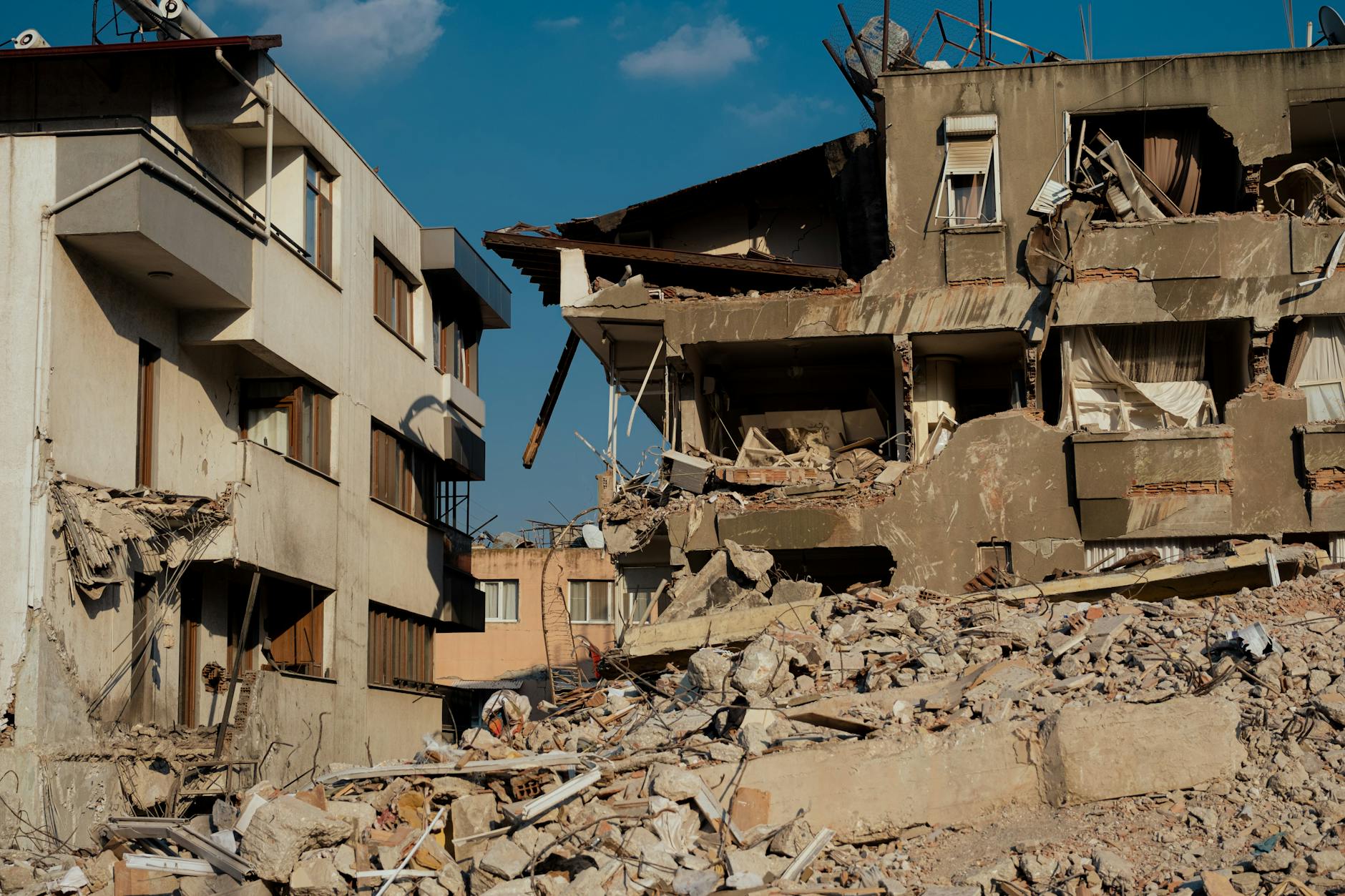
A 4.2-magnitude earthquake struck the Sivrice district of Turkey's eastern Elazığ province in the early hours of June 26, 2026, according to the country's Disaster and Emergency Management Authority (AFAD). The tremor, which occurred at a shallow depth of 7 kilometers, was felt across neighboring provinces including Malatya and Diyarbakır, rattling a region still recovering from the devastating 2020 quake. Shortly after, a separate 3.8-magnitude quake was recorded off the coast of Bartın in the Black Sea, highlighting Turkey's persistent seismic vulnerability.
Both AFAD and the Kandilli Observatory and Earthquake Research Institute confirmed the seismic events, providing real-time data that underscored the dynamic tectonic activity along the East Anatolian Fault. While no casualties or significant structural damage were immediately reported, the sequence of tremors has reignited discussions about urban transformation and earthquake preparedness in one of the world's most active seismic zones.
East Anatolian Fault Remains Active as Aftershocks and New Stress Releases Continue
The East Anatolian Fault, a major strike-slip fault zone where the Anatolian and Arabian plates meet, has been under intense scientific scrutiny since the 6.8-magnitude Elazığ earthquake in January 2020. The June 26 tremor, recorded at 4.2 by AFAD and 4.1 by Kandilli, is not classified as an aftershock of the 2020 event but rather as an independent stress release within the same tectonic regime. Geologists note that the Sivrice-Pütürge segment continues to accumulate strain, making moderate earthquakes of this scale a regular occurrence.
Just a day earlier, on June 25, 2026, Malatya's Doğanşehir district experienced a 3.1-magnitude tremor, adding to the regional seismic cluster. These minor to moderate quakes suggest a complex stress transfer mechanism at depth, though experts caution against interpreting them as precursors to a larger event. Since the beginning of 2026, AFAD has recorded more than ten earthquakes ranging between 4.0 and 4.5 in the broader Eastern Anatolia region, a figure consistent with long-term geological averages.
Understanding Data Discrepancies Between AFAD and Kandilli Observatory
International observers often note the slight magnitude differences reported by Turkey's two leading seismic monitoring agencies. AFAD operates a nationwide network of accelerometers optimized for rapid response, while Kandilli relies on a historically established array of broadband seismometers. The 0.1-magnitude variance for the Elazığ quake falls well within acceptable scientific margins and does not indicate a contradiction. Both institutions adhere to international standards, and their combined data provides a more robust picture of Turkey's seismic landscape for global researchers.
A Rare Tremor in the Black Sea: Assessing Northern Turkey's Seismic Profile
At 06:45 local time on June 26, a 3.8-magnitude earthquake was detected offshore near Amasra, a coastal town in Bartın province. The quake, with a focal depth of 10 kilometers, was felt along the coastline in Zonguldak and Kastamonu. The Black Sea basin is generally considered a region of low to moderate seismicity compared to the North Anatolian Fault, but it is not immune to tectonic activity. This event originated from localized stress fields within the Eurasian Plate, far from the main branch of the North Anatolian Fault.
For residents of Turkey's northern coast, such tremors are relatively uncommon, which often amplifies public anxiety. AFAD's expanded monitoring network, upgraded as part of Turkey's 2025-2026 seismic hazard mitigation strategy, now includes additional stations along the Black Sea littoral, enabling precise detection of even minor offshore quakes. The 3.8-magnitude event posed no tsunami risk, as scientists confirm that a quake would need to exceed 6.5 in magnitude and involve significant vertical seafloor displacement to generate a wave in this enclosed sea.
Fault Lines and Future Risks in the Black Sea Region
While the Black Sea lacks the dramatic strike-slip faults found in eastern Turkey, it features extensional basins and minor fault systems that occasionally produce earthquakes. The June 26 tremor serves as a reminder that no part of Turkey is entirely aseismic. Urban planners in Bartın and surrounding provinces are increasingly incorporating seismic resilience into building codes, a practice that has become standard nationwide since the catastrophic 1999 İzmit earthquake. In 2026, the government's focus remains on retrofitting older structures and enforcing strict construction regulations in all regions, not just those on major fault lines.
Turkey's Earthquake Preparedness in 2026: Urban Transformation and Public Awareness
The absence of casualties in the June 26 earthquakes is a testament to Turkey's ongoing urban transformation efforts. Following the 2020 Elazığ disaster, the Ministry of Environment, Urbanization and Climate Change prioritized the reconstruction and reinforcement of approximately 15,000 residential units in the province. By early 2026, the majority of these projects had been completed, significantly reducing the vulnerability of the building stock. In Bartın, where the housing infrastructure is relatively newer, the 3.8-magnitude tremor caused no reported damage.
AFAD's 2026 digital awareness campaign has also played a crucial role in public education. The agency's mobile application, which provides instant earthquake alerts and safety instructions, surpassed 5 million downloads in the first quarter of the year. The classic 'Drop, Cover, and Hold On' drill remains the cornerstone of Turkey's civil defense strategy, with authorities urging citizens to treat small tremors as drills for potential larger events. Mandatory earthquake insurance (DASK) coverage has also expanded, though officials estimate that thousands of rural stone and adobe homes in Eastern Anatolia still require urgent structural assessment.
Updated Seismic Hazard Map and Regional Risk Distribution
Turkey's updated Seismic Hazard Map classifies Elazığ and Malatya within the highest risk zones, with Peak Ground Acceleration (PGA) values exceeding 0.4g. This scientific framework guides construction standards and insurance premiums. International seismologists collaborating with AFAD note that while the East Anatolian Fault's behavior is well-modeled, the secondary faults like the Sürgü Fault near Malatya require deeper investigation. The 2026 tremor sequence provides valuable data for refining these models, ensuring that both local and global scientific communities can better anticipate seismic trends in this complex tectonic junction.
Turkey's Seismic Activity in a Global Context: Lessons for Earthquake-Prone Nations
Turkey's experience with frequent moderate earthquakes offers critical lessons for other seismically active nations, from Japan to Chile. The June 26 events demonstrate that robust early warning systems, combined with strict building codes and public education, can drastically reduce the human cost of earthquakes. In 2026, Turkey operates one of Europe's densest seismic monitoring networks, with over 1,200 stations transmitting data in real time to AFAD and Kandilli. This infrastructure not only serves domestic safety but also contributes to global databases like the European-Mediterranean Seismological Centre (EMSC).
Economically, the resilience shown in Elazığ and Bartın underscores the return on investment in disaster mitigation. While the initial cost of urban transformation runs into billions of Turkish lira, the avoidance of post-disaster reconstruction and economic disruption justifies the expenditure. As climate change and urbanization increase global exposure to natural hazards, Turkey's 2026 status as a laboratory for seismic risk management is drawing increased attention from international development agencies and academic institutions. The country's ability to absorb a 4.2-magnitude quake without disruption is a benchmark for resilience in the developing world.
Future Outlook: Monitoring Stress Accumulation on the East Anatolian Fault
Looking ahead, geophysicists are closely monitoring the stress accumulation on the East Anatolian Fault's various segments. The 2020 Elazığ earthquake ruptured a specific portion of the fault, but adjacent segments remain locked and capable of producing significant events. The micro-seismicity observed on June 25-26, 2026, provides a window into these deep geological processes. While predicting the exact timing of earthquakes remains beyond current scientific capability, the continuous data stream from Turkey's monitoring networks ensures that authorities and citizens are better prepared than ever before. For now, the message from AFAD is clear: vigilance, education, and infrastructure investment remain the most effective defenses against the inevitable next tremor.
